Introduction
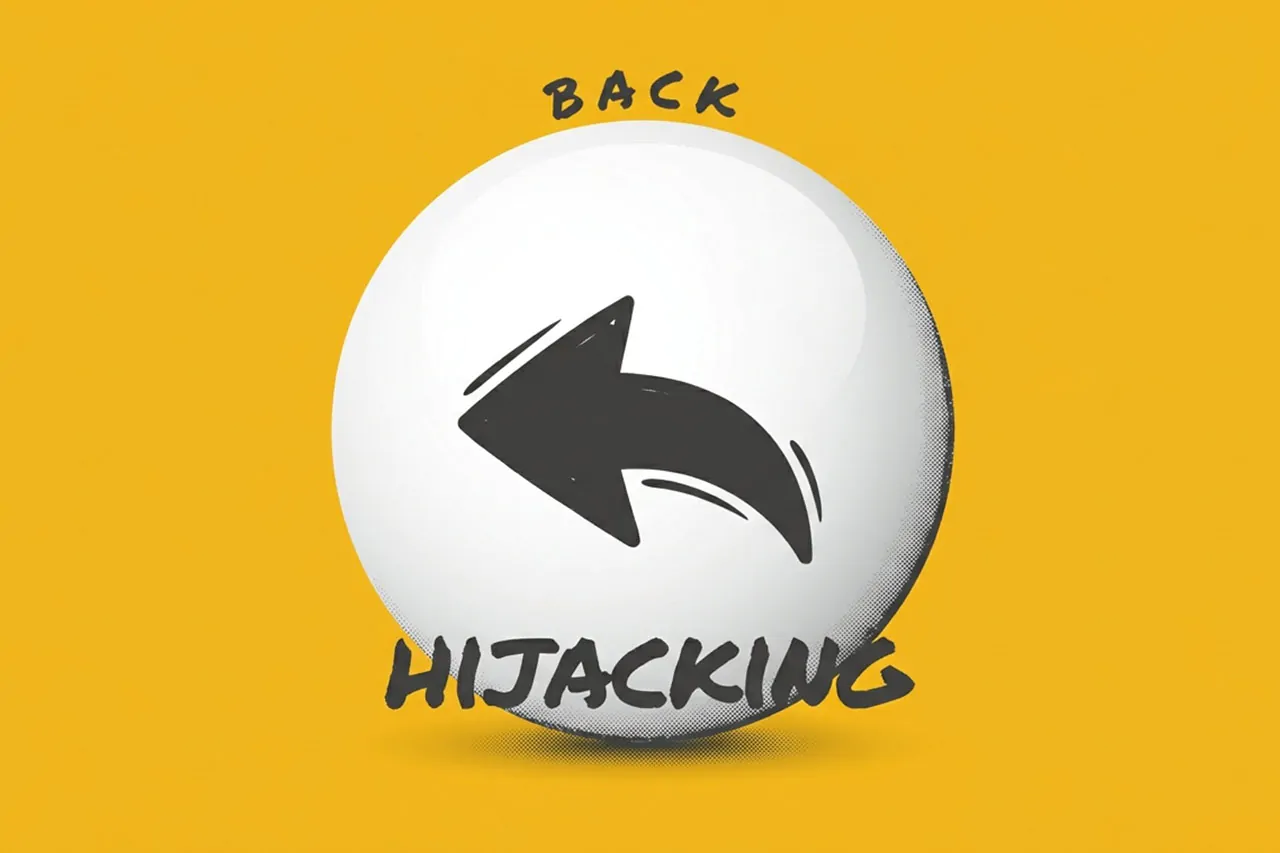
In an increasingly competitive digital landscape, some website operators resort to manipulative tactics to keep visitors on their pages for as long as possible. One of the most disruptive practices to user experience is back button hijacking — a technique that overrides the browser’s “Back” button. Google has now officially classified this practice as a violation of its spam policies, with strict enforcement beginning on June 15, 2026.
Need a Professional Website? Or a Team to Maintain It?
Bring your business, organization, or institution (ministries, government agencies, professional organizations, communities, educational institutions) to life with a professional and informative website through our professional website development services — responsive, secure, and aligned with your official visual identity.
Ensure your website is always well-managed with our website maintenance services.
Click the WhatsApp button below to consult directly with the SIMPLIFY team.
[vc_row][vc_column][vc_btn title=”WhatsApp” style=”classic” shape=”round” color=”success” align=”left” i_icon_fontawesome=”fa fa-whatsapp” add_icon=”true” link=”url:https%3A%2F%2Fwa.me%2F%2B628998706033|target:_blank”][/vc_column][/vc_row]
Or save SIMPLIFY’s contact number — you might need it tomorrow.
SAVE SIMPLIFY CONTACT



What Is Back Button Hijacking?
Back button hijacking is a browser navigation manipulation technique where a website prevents users from using the “Back” button to return to the previous page. When users click the “Back” button, they have a clear expectation: they want to return to the previous page. Back button hijacking violates this fundamental expectation. Google
Instead of returning to the original page, users may be redirected to pages they have never visited, shown unwanted recommendations or ads, or even completely prevented from navigating backward. 9to5Google
From a technical perspective, back button hijacking occurs when a page forces the “Back” button to behave in unintended ways. For example: users remain on the same page (as if the button does not work), are redirected to different pages such as ads or offer pages, get trapped in chains of pages that make it difficult to leave, or are stuck in loops that continuously reload the same page. Junia AI
This technique is typically implemented through JavaScript manipulation of the browser history API — for example, by inserting fake entries into the navigation history so that the “Back” button leads to trap pages instead of the original Google search results or the referring site.
Why Is Google Acting Now?
Although browser navigation manipulation has long been considered against Google’s guidelines, on April 13, 2026, Google officially declared back button hijacking as an explicit violation of its spam policies under the malicious practices category, with enforcement set to begin on June 15, 2026. PPC Land
Google stated that it has observed a rise in such behavior, which is why it is now explicitly categorized as a violation of malicious practices. Search Engine Land According to Google, such practices create a mismatch between user expectations and actual outcomes — a hallmark of manipulative and deceptive behavior.
Impact on Users and the Web Ecosystem
From a user perspective, the impact is very real. Users report feeling manipulated and become reluctant to visit unfamiliar websites. Search Engine Land Trust in the overall web ecosystem is also eroded.
From an SEO and digital business standpoint, the consequences are equally serious. Websites involved in back button hijacking risk receiving manual spam penalties or automated ranking demotions, both of which can significantly reduce their visibility in Google search results. Search Engine Journal
More concerning, since December 2024, Google has begun linking manual search penalties with advertising eligibility — marking the first time in the company’s history that organic enforcement actions directly impact paid advertising. Sites penalized for back button hijacking may also face advertising restrictions. PPC Land
Who Is Responsible?
A crucial point in this new policy is that responsibility does not lie solely with site owners. Some cases of back button hijacking may originate from third-party libraries embedded on a site or from advertising platforms in use. Google urges site owners to thoroughly review their technical implementations and disable any code, imports, or configurations responsible for this behavior. 9to5Google
This is especially relevant for ad tech, popups, redirect chains, affiliate pages, and certain engagement widgets. SEO, content, and growth teams must ensure that no scripts are behaving improperly on their pages. Junia AI
Steps Website Owners Should Take
Google provides a two-month grace period before enforcement begins. Here are the recommended steps:
1. Conduct a Comprehensive Technical Audit Review all JavaScript running on your site, especially those related to browser history management (history.pushState, history.replaceState). Ensure no fake or manipulative entries are inserted into navigation history.
2. Check Third-Party Libraries and Platforms Analytics scripts, A/B testing tools, consent management platforms, and ad networks are often hidden sources of this issue. Test back button behavior after each third-party script loads.
3. Test Navigation Behavior Perform manual testing: visit your pages from Google search results, then press the “Back” button. Ensure you are taken directly back to the search results page without interference.
4. Submit a Reconsideration Request (if penalized) If your site has been affected by manual actions and the issue has been resolved, you can notify Google by submitting a reconsideration request through Search Console. Google
Context in Google’s Spam Policy History
This policy is not the first in Google’s series of anti-spam updates. It follows the March 2024 spam policy update, which also provided a two-month compliance window regarding site reputation abuse. Search Engine Journal
In January 2025, Google expanded its search quality guidelines by 11 pages with additional spam identification criteria. The March 2026 spam update, rolled out globally across all languages and regions, arrived just three weeks before this announcement — indicating that this policy expansion may have been prepared alongside ongoing algorithmic updates. PPC Land
The Philosophy Behind This Policy
Back button hijacking is not targeted merely because it is annoying. It is targeted because it violates user autonomy. This policy does not introduce a new philosophy — it reinforces an existing one: users control navigation; websites facilitate it, not override it. Any system built on interference is now structurally incompatible with modern search standards. Vocal Media
This is a clear signal from Google that the era of manipulating users for artificial metrics — such as inflated session durations or forced pageviews — is coming to an end.
Conclusion
The classification of back button hijacking as an explicit violation of Google’s spam policy marks a significant milestone in maintaining the integrity of user experience on the web. For website owners, this serves as both a warning and an opportunity to eliminate manipulative practices that may have gone unnoticed — whether from their own code or third-party sources.
The June 15, 2026 deadline provides ample time to conduct audits and implement fixes. Make the most of this window, because after that date, the consequences — ranging from ranking drops to advertising restrictions — could significantly impact the sustainability of your digital business.
References
- Nelson, C. (2026, April 13). Introducing a new spam policy for “back button hijacking”. Google Search Central Blog. https://developers.google.com/search/blog/2026/04/back-button-hijacking
- Southern, M. G. (2026, April 13). New Google spam policy targets back button hijacking. Search Engine Journal. https://www.searchenginejournal.com/new-google-spam-policy-targets-back-button-hijacking/571859/
- Schwartz, B. (2026, April 13). Google Search to penalize back button hijacking schemes. Search Engine Land. https://searchengineland.com/google-search-to-penalize-back-button-hijacking-schemes-474167
- 9to5Google Staff. (2026, April 13). Google Search to classify ‘back button hijacking’ as spam. 9to5Google. https://9to5google.com/2026/04/13/google-search-back-button-hijacking/
- PPC Land. (2026, April 13). Google sets June 15 deadline to stop hijacking users’ back button. PPC Land. https://ppc.land/google-sets-june-15-deadline-to-stop-hijacking-users-back-button/
- Android Authority Staff. (2026, April 13). Google’s cracking down on ‘back button hijacking’. Android Authority. https://www.androidauthority.com/google-search-back-button-hijacking-3657128/
- Dhumal, P. (2026, April 13). Back button hijacking: Google’s new spam policy that will reshape user experience. Vocal Media — Journal. https://vocal.media/journal/back-button-hijacking-google-s-new-spam-policy-that-will-reshape-user-experience
- Junia.ai Blog. (2026, April 13). Google’s new back button hijacking spam policy explained: Fixes before June 15. Junia.ai. https://www.junia.ai/blog/google-back-button-hijacking-spam-policy
- Google Search. (2026). Google Search Essentials — Spam policies: Malicious practices. Google for Developers. https://developers.google.com/search/docs/essentials/spam-policies#malicious-practices